This class is subject to change. Programs using this class may require changes with a new version of VirtualLab.
Class for objects that store gridded data in C^N which are equidistant or non equidistant distributed in R^2
More...
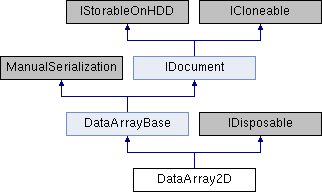
Public Member Functions | |
| override object | Clone () |
| Deep copy More... | |
| double | CoordinateOfDataPointIndex_X (long indexX) |
| Gives the x coordinate of a certain data point as double. More... | |
| PhysicalValue | CoordinateOfDataPointIndex_X_asPValue (long indexX) |
| Gives the x coordinate of a certain data point as PhysicalValue. More... | |
| double | CoordinateOfDataPointIndex_Y (long indexY) |
| Gives the y coordinates of a certain data point as double. More... | |
| PhysicalValue | CoordinateOfDataPointIndex_Y_asPValue (long indexY) |
| Gives the y coordinates of a certain data point as PhysicalValue. More... | |
| DataArray2D (ComplexFieldArray data, PhysicalProperty[] physicalPropertiesOfData, string[] commentsOfData, CFieldDerivative1DReal coordinatesX, PhysicalProperty physicalPropertyOfCoordinatesX, string commentOfCoordinatesX, double coordinateOfLastXIntervalsUpperLimit, CFieldDerivative1DReal coordinatesY, PhysicalProperty physicalPropertyOfCoordinatesY, string commentOfCoordinatesY, double coordinateOfLastYIntervalsUpperLimit, ExtrapolationInfo extrapolation=null, InterpolationMethodForNonequidistantData interpolationX=InterpolationMethodForNonequidistantData.ConstantInterval, InterpolationMethodForNonequidistantData interpolationY=InterpolationMethodForNonequidistantData.ConstantInterval) | |
| Constructor for data, non-equidistant in x and y, and with a coordinate for the last interval's upper limit for x and y, respectively. More... | |
| DataArray2D (ComplexFieldArray data, PhysicalProperty[] physicalPropertiesOfData, string[] commentsOfData, CFieldDerivative1DReal coordinatesX, PhysicalProperty physicalPropertyOfCoordinatesX, string commentOfCoordinatesX, double coordinateOfLastXIntervalsUpperLimit, double samplingDistanceY, double coordinateOfFirstDataPointY, PhysicalProperty physicalPropertyOfCoordinatesY, string commentOfCoordinatesY, ExtrapolationInfo extrapolation=null, InterpolationMethodForNonequidistantData interpolationX=InterpolationMethodForNonequidistantData.ConstantInterval, InterpolationMethod interpolationY=InterpolationMethod.Nearest) | |
| Constructor for data, non-equidistant in x and equidistant in y. More... | |
| DataArray2D (ComplexFieldArray data, PhysicalProperty[] physicalPropertiesOfData, string[] commentsOfData, double samplingDistanceX, double coordinateOfFirstDataPointX, PhysicalProperty physicalPropertyOfCoordinatesX, string commentOfCoordinatesX, CFieldDerivative1DReal coordinatesY, PhysicalProperty physicalPropertyOfCoordinatesY, string commentOfCoordinatesY, double coordinateOfLastYIntervalsUpperLimit, ExtrapolationInfo extrapolation=null, InterpolationMethod interpolationX=InterpolationMethod.Nearest, InterpolationMethodForNonequidistantData interpolationY=InterpolationMethodForNonequidistantData.ConstantInterval) | |
| Constructor for data, equidistant in x and non-equidistant in y. More... | |
| DataArray2D (ComplexFieldArray data, PhysicalProperty[] physicalPropertiesOfData, string[] commentsOfData, double samplingDistanceX, double coordinateOfFirstDataPointX, PhysicalProperty physicalPropertyOfCoordinatesX, string commentOfCoordinatesX, double samplingDistanceY, double coordinateOfFirstDataPointY, PhysicalProperty physicalPropertyOfCoordinatesY, string commentOfCoordinatesY, ExtrapolationInfo extrapolation=null, InterpolationMethod interpolationX=InterpolationMethod.Nearest, InterpolationMethod interpolationY=InterpolationMethod.Nearest) | |
| Constructor for data, equidistant in x and y. More... | |
| DataArray2D (DataArray2D dataArray) | |
| Copy constructor More... | |
| DataArray2D (double[,] data, PhysicalProperty physicalPropertyOfData, string commentOfData, double samplingDistanceX, double coordinateOfFirstDataPointX, PhysicalProperty physicalPropertyOfCoordinatesX, string commentOfCoordinatesX, double samplingDistanceY, double coordinateOfFirstDataPointY, PhysicalProperty physicalPropertyOfCoordinatesY, string commentOfCoordinatesY, ExtrapolationInfo extrapolation=null, InterpolationMethod interpolationX=InterpolationMethod.Nearest, InterpolationMethod interpolationY=InterpolationMethod.Nearest) | |
| Special constructor for data, equidistant in x and y which gets a double[,] array. Only one subset is used, i.e. N = 1. More... | |
| void | Dispose () |
| Frees all memory that is used for the data. | |
| void | EmbedExtract (Vector numberOfDataPoints) |
| Method to perform an embed/extract operation on the data array. More... | |
| DataArray2D | EmbedExtract (Vector startPoint, Size extractSize) |
| Method to extract a given data point range from this More... | |
| override bool | Equals (object obj, EqualityIntent equalityIntent) |
| Checks whether two DataArray1D objects are equal. More... | |
| void | EquidistantToNonEquidistant (AxisDirection directionToConvert, bool forNN_convertCenterCoordinateInsteadOfIntervalBorder) |
| If this data array is equidistant, this conversion method makes it non equidistant for the given dimension X or Y. This is done by calculating the member NonequidistantCoordinates_X/Y from CoordinateOfFirstDataPoint_X/Y, SamplingDistance_X/Y and the respective index. More... | |
| void | EquidistantToNonEquidistant (bool forNN_convertCenterCoordinateInsteadOfIntervalBorder) |
| If this data array is equidistant, this conversion method makes it non equidistant for both dimensions X and Y. This is done by calculating the member NonequidistantCoordinates_X/Y from CoordinateOfFirstDataPoint_X/Y, SamplingDistance_X/Y and the respective index. More... | |
| DataArray2D | FieldInterpolation_PureEquidistantSampling (SamplingParameters sParaInterpolation, InterpolationMethod? interpolationMethod=null) |
| Interpolates this DataArray2D completely and gives a new resampled data array if both dimensions x and y are sampled equidistantly. Each DataSubSet is interpolated to the user defined sampling parameters More... | |
| void | Fill (Complex[] values) |
| Method to fill the data array subsets, each with a constant value. More... | |
| PhysicalValueRange | GetCoordinateRange_X (bool boundaryExtrapolation) |
| Gets the whole range of x-coordinates (coordinate extent). More... | |
| PhysicalValueRange | GetCoordinateRange_Y (bool boundaryExtrapolation) |
| Gets the whole range of y-coordinates (coordinate extent). More... | |
| override string | HeaderInformation (int subSetID, TextExportImportSettings exportSettings, FieldQuantity? quantityForInformation=null) |
| Public method to get the export header (data meaning and sampling parameters) for a specific data array. More... | |
| long | IndexOfDataPointAtCoordinate_X (double xCoord, bool enforceSteppedInterpolation, out bool coordinatesOutsideGivenIndexRange) |
| Method to get the x index of that data point which corresponds to a given x coordinate. More... | |
| long | IndexOfDataPointAtCoordinate_X (double xCoord, long startIndex, long endIndex, bool enforceSteppedInterpolation, out bool coordinatesOutsideGivenIndexRange) |
| Method to get the x index of that data point which corresponds to a given x coordinate. More... | |
| long | IndexOfDataPointAtCoordinate_Y (double yCoord, bool enforceSteppedInterpolation, out bool coordinatesOutsideGivenIndexRange) |
| Method to get the y index of that data point which corresponds to a given y coordinate. More... | |
| long | IndexOfDataPointAtCoordinate_Y (double yCoord, long startIndex, long endIndex, bool enforceSteppedInterpolation, out bool coordinatesOutsideGivenIndexRange) |
| Method to get the y index of that data point which corresponds to a given y coordinate. More... | |
| void | InsertDataArray2D (DataArray2D arrayToInsert) |
| Inserts another DataArray2D into this. Data inside the coordinate range of the array to insert will be overwritten. More... | |
| void | Mirror (AxisDirection mirrorAxis) |
| Mirrors the dataArray2D either in x or y direction. The position of the mirror axis is defined as the center of the array (with reference to the coordinate to invert). More... | |
| void | Mirror (AxisDirection mirrorAxis, double mirrorAxisPosition) |
| Mirrors the dataArray2D either in x or y direction. The position of the mirror axis can be arbitrary. More... | |
| Complex[] | PointInterpolation (VectorD coords, bool enforceSteppedInterpolation, out Vector relatedDataPointIndices, out bool coordinatesOutsideGivenIndexRange) |
| Gives the interpolated complex value for given coordinates. Search intervals [startIndices.X, endIndices.X] and [startIndices.Y, endIndices.Y] can be set. At the moment, there are only nearest neighbor (for equidistant data) and constant interval interpolation (for non equidistant data) supported. More... | |
| Complex[] | PointInterpolation (VectorD coords, Vector startIndices, Vector endIndices, bool enforceSteppedInterpolation, out Vector relatedDataPointIndices, out bool coordinatesOutsideGivenIndexRange) |
| Gives the interpolated complex value for given coordinates. Search intervals [startIndices.X, endIndices.X] and [startIndices.Y, endIndices.Y] can be set. At the moment, there are only nearest neighbor (for equidistant data), constant interval interpolation (for non equidistant data), and linear interpolation (for both sampling types) supported. More... | |
| void | Rotate (DiscreteOrientation rotationAngle) |
| TU20111202 Rotates this DataArray2D around its central point More... | |
| override void | Save (string fileName) |
| Save this data array to a file with a given name. More... | |
| void | SetDataWithPropertiesAndCommentsAtOnce (ComplexFieldArray data, PhysicalProperty[] properties, string[] comments) |
| Sets the members Data, PhysicalPropertiesOfDataEntries and CommentsOfDataEntries at once to ensure consistency. More... | |
 Public Member Functions inherited from DataArrayBase Public Member Functions inherited from DataArrayBase | |
| DataArrayBase () | |
| Standard constructor used for manual serialization | |
| DataArrayBase (DataArrayBase copyDA) | |
| copy constructor More... | |
| Public Member Functions inherited from IDocument | |
| void | Reload () |
| Reload function for the document | |
Static Public Member Functions | |
| static DataArray2D | CreateDataArray2DEquidistantOrNonEquidistant (ComplexFieldArray data, PhysicalProperty[] physicalPropertiesOfData, string[] commentsOfData, List< PhysicalValue > coordinatesX, List< PhysicalValue > coordinatesY, InterpolationMethod interpolationMethodEquidistant, InterpolationMethodForNonequidistantData interpolationMethodNonEquidistant, ExtrapolationInfo extrapolation=null) |
| Static 'constructor' for data that can be either equidistant or non-equidistant. More... | |
| static DataArray2D | CreateDataArray2DEquidistantOrNonEquidistant (List<(double x, double y, Complex[] data)> dataPoints, PhysicalProperty[] physicalPropertiesOfData, string[] commentsOfData, PhysicalProperty physicalPropertyOfCoordinatesX, string commentOfCoordinatesX, PhysicalProperty physicalPropertyOfCoordinatesY, string commentOfCoordinatesY, InterpolationMethod interpolationMethodEquidistant, InterpolationMethodForNonequidistantData interpolationMethodNonEquidistant, ExtrapolationInfo extrapolation=null) |
| Static 'constructor' for data points that can be either equidistant or non-equidistant. More... | |
| static DataArray2D | Load (string fileName) |
| Loads the specified file name. Works independently from whether the document has been saved without view settings (as prior to VL 6.0) or with view settings. More... | |
| static DataArray2D | Load (string fileName, out UI.ViewSettings_SaveAndLoad.ListOfSavedViewSettings viewSettings) |
| Loads the specified file name. Works independently from whether the document has been saved without view settings (as prior to VL 6.0) or with view settings. More... | |
| static bool | operator!= (DataArray2D da1, DataArray2D da2) |
| Checks whether two DataArray2D objects are unequal. More... | |
| static DataArray2D | operator* (DataArray2D dataArray1, DataArray2D dataArray2) |
| Implements the operator * for multiplication of two two-dimensional data arrays. More... | |
| static DataArray2D | operator+ (DataArray2D dataArray1, DataArray2D dataArray2) |
| Implements the operator + for addition of two two-dimensional data arrays. More... | |
| static DataArray2D | operator- (DataArray2D dataArray1, DataArray2D dataArray2) |
| Implements the operator - for subtraction of two two-dimensional data arrays. More... | |
| static DataArray2D | operator/ (DataArray2D dataArray1, DataArray2D dataArray2) |
| Implements the operator / for division of two two-dimensional data arrays. More... | |
| static bool | operator== (DataArray2D da1, DataArray2D da2) |
| Checks whether two DataArray2D objects are equal. More... | |
Properties | |
| double | BiggestCoordinateStep_X [get] |
| Gets the biggest occurring distance between two neighbored x-coordinates. (So in the equidistant case, this is identical to SamplingDistance_X.) | |
| double | BiggestCoordinateStep_Y [get] |
| Gets the biggest occurring distance between two neighbored y-coordinates. (So in the equidistant case, this is identical to SamplingDistance_Y.) | |
| string | CommentOfCoordinates_X [get, set] |
| Gets and sets the comment for the x-coordinates. | |
| string | CommentOfCoordinates_Y [get, set] |
| Gets and sets the comment for the y-coordinates. | |
| override string[] | CommentsOfDataEntries [get, set] |
| Gets and sets the comment for each dimension in C^N. | |
| double | CoordinateOfFirstDataPoint_X [get, set] |
| Gets and sets the x-coordinate of the data point Data[0,0]. | |
| double | CoordinateOfFirstDataPoint_Y [get, set] |
| Gets and sets the y-coordinate of the data point Data[0,0]. | |
| double | CoordinateOfLast_X_IntervalsUpperLimit [get, set] |
| Gets and sets the coordinate of the last interval's upper limit for the x-dimension. This is needed if non equidistantly sampled data shall be interpolated in x with the method 'ConstantInterval'. For this method the data are assumed to be constant in each interval which is given by [coordinate(i), coordinate(i+1)[, where i is the data point index. So the width of the last interval has to be defined separately by [coordinate(NoOfDataPoints_X-1), CoordinateOfLast_X_IntervalsUpperLimit[. | |
| double | CoordinateOfLast_Y_IntervalsUpperLimit [get, set] |
| Gets and sets the coordinate of the last interval's upper limit for the y-dimension. This is needed if non equidistantly sampled data shall be interpolated in y with the method 'ConstantInterval'. For this method the data are assumed to be constant in each interval which is given by [coordinate(i), coordinate(i+1)[, where i is the data point index. So the width of the last interval has to be defined separately by [coordinate(NoOfDataPoints_Y-1), CoordinateOfLast_Y_IntervalsUpperLimit[. | |
| double | CoordinateOfLastDataPoint_X [get] |
| Gets the x-coordinate of the data point Data[NoOfDataPoints_X - 1, NoOfDataPoints_Y - 1]. | |
| double | CoordinateOfLastDataPoint_Y [get] |
| Gets the y-coordinate of the data point Data[NoOfDataPoints_X - 1, NoOfDataPoints_Y - 1]. | |
| ComplexFieldArray | Data [get, set] |
| Gets and sets the data in C^N. Each single 2D ComplexField in this array holds one data subset, i.e. the complete set of data for one data dimension \(i\) ( \(1 \leq i \leq N\)). | |
| override DataArrayType | DataArrayType [get] |
| public property to get the data array type of the current data array | |
| override int | DimensionalityOfCoordinates [get] |
| Dimensionality M of the space of independent variables R^M | |
| override int | DimensionalityOfData [get] |
| Dimensionality N of the space of data values C^N | |
| bool | Equidistant_X [get, set] |
| Gets and sets whether the data are sampled equidistantly in x. | |
| bool | Equidistant_Y [get, set] |
| Gets and sets whether the data are sampled equidistantly in y. | |
| ExtrapolationInfo | ExtrapolationHandling [get, set] |
| The extrapolation handling. | |
| InterpolationMethod | InterpolationMethodForEquidistantSampling_X [get, set] |
| Gets and sets the method used for interpolation in case of equidistant sampling in x-direction. | |
| InterpolationMethod | InterpolationMethodForEquidistantSampling_Y [get, set] |
| Gets and sets the method used for interpolation in case of equidistant sampling in y-direction. | |
| InterpolationMethodForNonequidistantData | InterpolationMethodForNonequidistantSampling_X [get, set] |
| Gets and sets the method used for interpolation in case of non equidistant sampling in x-direction. For the method 'ConstantInterval' the data are assumed to be constant in each interval which is given by [coordinate(i), coordinate(i+1)[, where i is the data point index. So the width of the last interval has to be defined separately by [coordinate(NoOfDataPoints_X - 1), CoordinateOfLast_X_IntervalsUpperLimit[. | |
| InterpolationMethodForNonequidistantData | InterpolationMethodForNonequidistantSampling_Y [get, set] |
| Gets and sets the method used for interpolation in case of non equidistant sampling in y-direction. For the method 'ConstantInterval' the data are assumed to be constant in each interval which is given by [coordinate(i), coordinate(i+1)[, where i is the data point index. So the width of the last interval has to be defined separately by [coordinate(NoOfDataPoints_Y - 1), CoordinateOfLast_Y_IntervalsUpperLimit[. | |
| override bool | IsComplex [get] |
| Are the values defined in C^N (TRUE) or in the subset of real numbers R^N (FALSE)? Returns TRUE if any of the data entries is complex. | |
| CFieldDerivative1DReal | NonequidistantCoordinates_X [get, set] |
| CFieldDerivative1DReal | NonequidistantCoordinates_Y [get, set] |
| Gets and sets the y-coordinates for the data in R^2. IMPORTANT: This property applies for non equidistant data only! If you need to get the coordinates for one index for equidistant as well as for non equidistant data, use the method CoordinateOfDataPointIndex_Y(long index) instead! For setting pay attention to the following restrictions: value must not be complex and value.SamplingPointsOneD has to be equal to NoOfDataPoints_Y. | |
| int | NoOfDataPoints_X [get] |
| Gets the number of data values stored in x-direction. | |
| int | NoOfDataPoints_Y [get] |
| Gets the number of data values stored in y-direction. | |
| override bool | NoSmoothingInterpolationMethod [get] |
| Gets a flag indicating whether or not none of the interpolation methods is smoothing (like nearest neighbor or constant interval) -> TRUE But if one of the methods does (like all other methods) -> the flag is set to FALSE | |
| override PhysicalProperty[] | PhysicalPropertiesOfDataEntries [get, set] |
| Gets and sets the physical property for each dimension in C^N. | |
| PhysicalProperty | PhysicalPropertyOf_X_Coordinates [get, set] |
| Gets and sets the physical property for the x-coordinates. | |
| PhysicalProperty | PhysicalPropertyOf_Y_Coordinates [get, set] |
| Gets and sets the physical property for the y-coordinates. | |
| override PrecisionMode | Precision [get] |
| Get the highest occurring precision of the data. | |
| double | SamplingDistance_X [get, set] |
| Gets and sets the sampling distance for (and only for) data sampled equidistantly in x. | |
| double | SamplingDistance_Y [get, set] |
| Gets and sets the sampling distance for (and only for) data sampled equidistantly in y. | |
| double | SmallestCoordinateStep_X [get] |
| Gets the smallest occurring distance between two neighbored x-coordinates. (So in the equidistant case, this is identical to SamplingDistance_X.) | |
| double | SmallestCoordinateStep_Y [get] |
| Gets the smallest occurring distance between two neighbored y-coordinates. (So in the equidistant case, this is identical to SamplingDistance_Y.) | |
| CoordinateDefinitionType | Tag [set] |
| Gets and sets the Tag of the DataArray2D which can be used for additional information. Now replaced by the property AdditionalInformation. | |
| Properties inherited from DataArrayBase | |
| Dictionary< string, object > | AdditionalInformation [get, set] |
| Additional information to be stored at the data array. | |
| abstract string[] | CommentsOfDataEntries [get, set] |
| Get and set the comment for each dimension in C^N. | |
| abstract int | DimensionalityOfCoordinates [get] |
| Dimensionality M of the space of independent variables R^M | |
| abstract int | DimensionalityOfData [get] |
| Dimensionality N of the space of data values C^N | |
| UI.DataVisualization.GraphicsAddOnData | GraphicsAddons [get, set] |
| The graphics add-on data to be drawn. | |
| abstract bool | IsComplex [get] |
| Are the values defined in C^N (TRUE) or in the subset of real numbers R^N (FALSE) | |
| abstract bool | NoSmoothingInterpolationMethod [get] |
| Gets a flag indicating whether or not none of the interpolation methods is smoothing (like nearest neighbor or constant interval) -> TRUE But if one of the methods does (like all other methods) -> the flag is set to FALSE | |
| PhysicalMeaning | PhysicalMeaning [get, set] |
| Gets and sets the physical meaning of the data array object (default: None) | |
| abstract PhysicalProperty[] | PhysicalPropertiesOfDataEntries [get, set] |
| Get and set the physical property for each dimension in C^N | |
| abstract PrecisionMode | Precision [get] |
| Get the highest occurring precision of the data. | |
| Properties inherited from IDocument | |
| VirtualLabSession | Session [get, set] |
| every documents need to be handled in a session ==> default is the VirtualLab Mainsession | |
| NodeVLExplorer | TreeStructure [get] |
| every document should have a node (maybe with subnodes) in the VirtualLab Explorer | |
| DocumentType | TypeOfDocument [get] |
| Gets an enum entry specifying the type of the document. | |
Additional Inherited Members | |
| Static Public Attributes inherited from DataArrayBase | |
| static string | AdditionalInfoName_SingleWavelength |
| Key to be used in the additional information list in order to identify a single wavelength which applies to all subsets. | |
| static string | AdditionalInfoName_SphericalModulationFlag |
| Key to be used in the additional information list in order to identify the flag which tells whether or not the modulation of a EquidistantDataBased2DFieldGenerator is defined in spherical coordinates. | |
| static string | AdditionalInfoName_WavelengthPerSubset |
| Key to be used in the additional information list in order to identify an array of wavelengths where every value applies to one subset. | |
Detailed Description
This class is subject to change. Programs using this class may require changes with a new version of VirtualLab.
Class for objects that store gridded data in C^N which are equidistant or non equidistant distributed in R^2
Constructor & Destructor Documentation
◆ DataArray2D() [1/6]
| DataArray2D | ( | DataArray2D | dataArray | ) |
Copy constructor
- Parameters
-
dataArray Data array to copy
◆ DataArray2D() [2/6]
| DataArray2D | ( | ComplexFieldArray | data, |
| PhysicalProperty[] | physicalPropertiesOfData, | ||
| string[] | commentsOfData, | ||
| CFieldDerivative1DReal | coordinatesX, | ||
| PhysicalProperty | physicalPropertyOfCoordinatesX, | ||
| string | commentOfCoordinatesX, | ||
| double | coordinateOfLastXIntervalsUpperLimit, | ||
| CFieldDerivative1DReal | coordinatesY, | ||
| PhysicalProperty | physicalPropertyOfCoordinatesY, | ||
| string | commentOfCoordinatesY, | ||
| double | coordinateOfLastYIntervalsUpperLimit, | ||
| ExtrapolationInfo | extrapolation = null, |
||
| InterpolationMethodForNonequidistantData | interpolationX = InterpolationMethodForNonequidistantData.ConstantInterval, |
||
| InterpolationMethodForNonequidistantData | interpolationY = InterpolationMethodForNonequidistantData.ConstantInterval |
||
| ) |
Constructor for data, non-equidistant in x and y, and with a coordinate for the last interval's upper limit for x and y, respectively.
- Parameters
-
data The data in C^N. Each single 2D ComplexField in this array holds one data subset, i.e. the complete set of data for one data dimension \(i\) ( \(1 \leq i \leq N\)). physicalPropertiesOfData Physical properties of each data subset. commentsOfData Comments for each data subset. coordinatesX Non-equidistant coordinates for the data in X dimension. physicalPropertyOfCoordinatesX Physical property for the coordinates in X. commentOfCoordinatesX Comment for the coordinates in X. coordinateOfLastXIntervalsUpperLimit Coordinate of the last X interval's upper limit. coordinatesY Non-equidistant coordinates for the data in Y dimension. physicalPropertyOfCoordinatesY Physical property for the coordinates in Y. commentOfCoordinatesY Comment for the coordinates in Y. coordinateOfLastYIntervalsUpperLimit Coordinate of the last Y interval's upper limit. extrapolation Optional information about how extrapolation of the data shall be done. By default border value continuation is done. interpolationX The interpolation method to be used in x-direction. interpolationY The interpolation method to be used in y-direction.
◆ DataArray2D() [3/6]
| DataArray2D | ( | ComplexFieldArray | data, |
| PhysicalProperty[] | physicalPropertiesOfData, | ||
| string[] | commentsOfData, | ||
| double | samplingDistanceX, | ||
| double | coordinateOfFirstDataPointX, | ||
| PhysicalProperty | physicalPropertyOfCoordinatesX, | ||
| string | commentOfCoordinatesX, | ||
| CFieldDerivative1DReal | coordinatesY, | ||
| PhysicalProperty | physicalPropertyOfCoordinatesY, | ||
| string | commentOfCoordinatesY, | ||
| double | coordinateOfLastYIntervalsUpperLimit, | ||
| ExtrapolationInfo | extrapolation = null, |
||
| InterpolationMethod | interpolationX = InterpolationMethod.Nearest, |
||
| InterpolationMethodForNonequidistantData | interpolationY = InterpolationMethodForNonequidistantData.ConstantInterval |
||
| ) |
Constructor for data, equidistant in x and non-equidistant in y.
- Parameters
-
data The data in C^N. Each single 2D ComplexField in this array holds one data subset, i.e. the complete set of data for one data dimension \(i\) ( \(1 \leq i \leq N\)). physicalPropertiesOfData Physical properties of each data subset. commentsOfData Comments for each data subset. samplingDistanceX Sampling distance in X coordinateOfFirstDataPointX Coordinate of the first data point Data[0, y] for (and only for) equidistantly sampled data. physicalPropertyOfCoordinatesX Physical property for the coordinates in X. commentOfCoordinatesX Comment for the coordinates in X. coordinatesY Non-equidistant coordinates for the data in Y dimension. physicalPropertyOfCoordinatesY Physical property for the coordinates in Y. commentOfCoordinatesY Comment for the coordinates in Y. coordinateOfLastYIntervalsUpperLimit Coordinate of the last Y interval's upper limit. extrapolation Optional information about how extrapolation of the data shall be done. By default border value continuation is done. interpolationX The interpolation method to be used in x-direction. interpolationY The interpolation method to be used in y-direction.
◆ DataArray2D() [4/6]
| DataArray2D | ( | ComplexFieldArray | data, |
| PhysicalProperty[] | physicalPropertiesOfData, | ||
| string[] | commentsOfData, | ||
| CFieldDerivative1DReal | coordinatesX, | ||
| PhysicalProperty | physicalPropertyOfCoordinatesX, | ||
| string | commentOfCoordinatesX, | ||
| double | coordinateOfLastXIntervalsUpperLimit, | ||
| double | samplingDistanceY, | ||
| double | coordinateOfFirstDataPointY, | ||
| PhysicalProperty | physicalPropertyOfCoordinatesY, | ||
| string | commentOfCoordinatesY, | ||
| ExtrapolationInfo | extrapolation = null, |
||
| InterpolationMethodForNonequidistantData | interpolationX = InterpolationMethodForNonequidistantData.ConstantInterval, |
||
| InterpolationMethod | interpolationY = InterpolationMethod.Nearest |
||
| ) |
Constructor for data, non-equidistant in x and equidistant in y.
- Parameters
-
data The data in C^N. Each single 2D ComplexField in this array holds one data subset, i.e. the complete set of data for one data dimension \(i\) ( \(1 \leq i \leq N\)). physicalPropertiesOfData Physical properties of each data subset. commentsOfData Comments for each data subset. coordinatesX Non-equidistant coordinates for the data in X dimension. physicalPropertyOfCoordinatesX Physical property for the coordinates in X. commentOfCoordinatesX Comment for the coordinates in X. samplingDistanceY Sampling distance in Y coordinateOfFirstDataPointY Coordinate of the first data point Data[x, 0] for (and only for) equidistantly sampled data.
- Parameters
-
physicalPropertyOfCoordinatesY Physical property for the coordinates in Y. commentOfCoordinatesY Comment for the coordinates in Y. coordinateOfLastXIntervalsUpperLimit Coordinate of the last X interval's upper limit. extrapolation Optional information about how extrapolation of the data shall be done. By default border value continuation is done. interpolationX The interpolation method to be used in x-direction. interpolationY The interpolation method to be used in y-direction.
◆ DataArray2D() [5/6]
| DataArray2D | ( | ComplexFieldArray | data, |
| PhysicalProperty[] | physicalPropertiesOfData, | ||
| string[] | commentsOfData, | ||
| double | samplingDistanceX, | ||
| double | coordinateOfFirstDataPointX, | ||
| PhysicalProperty | physicalPropertyOfCoordinatesX, | ||
| string | commentOfCoordinatesX, | ||
| double | samplingDistanceY, | ||
| double | coordinateOfFirstDataPointY, | ||
| PhysicalProperty | physicalPropertyOfCoordinatesY, | ||
| string | commentOfCoordinatesY, | ||
| ExtrapolationInfo | extrapolation = null, |
||
| InterpolationMethod | interpolationX = InterpolationMethod.Nearest, |
||
| InterpolationMethod | interpolationY = InterpolationMethod.Nearest |
||
| ) |
Constructor for data, equidistant in x and y.
- Parameters
-
data The data in C^N. Each single 2D ComplexField in this array holds one data subset, i.e. the complete set of data for one data dimension \(i\) ( \(1 \leq i \leq N\)). physicalPropertiesOfData Physical properties of each data subset. commentsOfData Comments for each data subset. samplingDistanceX Sampling distance in X coordinateOfFirstDataPointX Coordinate of the first data point Data[0, y] for (and only for) equidistantly sampled data. physicalPropertyOfCoordinatesX Physical property for the coordinates in X. commentOfCoordinatesX Comment for the coordinates in X. samplingDistanceY Sampling distance in Y coordinateOfFirstDataPointY Coordinate of the first data point Data[x, 0] for (and only for) equidistantly sampled data. physicalPropertyOfCoordinatesY Physical property for the coordinates in Y. commentOfCoordinatesY Comment for the coordinates in Y. extrapolation Optional information about how extrapolation of the data shall be done. By default border value continuation is done. interpolationX The interpolation method to be used in x-direction. interpolationY The interpolation method to be used in y-direction.
- Exceptions
-
ArgumentException Empty ComplexFieldArray given. or Wrong number of physical properties for the data given. or Wrong number of data comments given. or Sampling Distances have to be greater than zero.
◆ DataArray2D() [6/6]
| DataArray2D | ( | double | data[,], |
| PhysicalProperty | physicalPropertyOfData, | ||
| string | commentOfData, | ||
| double | samplingDistanceX, | ||
| double | coordinateOfFirstDataPointX, | ||
| PhysicalProperty | physicalPropertyOfCoordinatesX, | ||
| string | commentOfCoordinatesX, | ||
| double | samplingDistanceY, | ||
| double | coordinateOfFirstDataPointY, | ||
| PhysicalProperty | physicalPropertyOfCoordinatesY, | ||
| string | commentOfCoordinatesY, | ||
| ExtrapolationInfo | extrapolation = null, |
||
| InterpolationMethod | interpolationX = InterpolationMethod.Nearest, |
||
| InterpolationMethod | interpolationY = InterpolationMethod.Nearest |
||
| ) |
Special constructor for data, equidistant in x and y which gets a double[,] array. Only one subset is used, i.e. N = 1.
- Parameters
-
data The data in C^1. The double values will be filled into one real valued subset. physicalPropertyOfData Physical properties of each data subset. commentOfData Comments for each data subset. samplingDistanceX Sampling distance in X coordinateOfFirstDataPointX Coordinate of the first data point Data[0, y] for (and only for) equidistantly sampled data. physicalPropertyOfCoordinatesX Physical property for the coordinates in X. commentOfCoordinatesX Comment for the coordinates in X. samplingDistanceY Sampling distance in Y coordinateOfFirstDataPointY Coordinate of the first data point Data[x, 0] for (and only for) equidistantly sampled data. physicalPropertyOfCoordinatesY Physical property for the coordinates in Y. commentOfCoordinatesY Comment for the coordinates in Y. extrapolation Optional information about how extrapolation of the data shall be done. By default border value continuation is done. interpolationX The interpolation method to be used in x-direction. interpolationY The interpolation method to be used in y-direction.
Member Function Documentation
◆ Clone()
| override object Clone | ( | ) |
Deep copy
- Returns
- Copy of data array
◆ CoordinateOfDataPointIndex_X()
| double CoordinateOfDataPointIndex_X | ( | long | indexX | ) |
Gives the x coordinate of a certain data point as double.
- Parameters
-
indexX X index of the data point to get the coordinate for.
- Returns
- X coordinate of the data point as double
◆ CoordinateOfDataPointIndex_X_asPValue()
| PhysicalValue CoordinateOfDataPointIndex_X_asPValue | ( | long | indexX | ) |
Gives the x coordinate of a certain data point as PhysicalValue.
- Parameters
-
indexX X index of the data point to get the coordinate for.
- Returns
- X coordinate of the data point as PhysicalValue
◆ CoordinateOfDataPointIndex_Y()
| double CoordinateOfDataPointIndex_Y | ( | long | indexY | ) |
Gives the y coordinates of a certain data point as double.
- Parameters
-
indexY Y index of the data point to get the coordinate for.
- Returns
- Y coordinate of the data point as double
◆ CoordinateOfDataPointIndex_Y_asPValue()
| PhysicalValue CoordinateOfDataPointIndex_Y_asPValue | ( | long | indexY | ) |
Gives the y coordinates of a certain data point as PhysicalValue.
- Parameters
-
indexY Y index of the data point to get the coordinate for.
- Returns
- Y coordinate of the data point as PhysicalValue
◆ CreateDataArray2DEquidistantOrNonEquidistant() [1/2]
|
static |
Static 'constructor' for data that can be either equidistant or non-equidistant.
- Parameters
-
data The data in C^N. Each single 2D ComplexField in this array holds one data subset, i.e. the complete set of data for one data dimension \(i\) ( \(1 \leq i \leq N\)). physicalPropertiesOfData Physical properties of each data subset. commentsOfData Comments for each data subset. coordinatesX The coordinates in x-direction (sorted ascending). If they are equidistant, sampling distance and minimum value are calculated from this array. Otherwise the given coordinates are used directly and the last interval's upper limit is the last coordinate plus the absolute distance to the last but one coordinate. Comment and physical property of the x-axis are taken from the corresponding properties of the first coordinate. coordinatesY The coordinates in y-direction (sorted ascending). If they are equidistant, sampling distance and minimum value are calculated from this array. Otherwise the given coordinates are used directly and the last interval's upper limit is the last coordinate plus the absolute distance to the last but one coordinate. Comment and physical property of the y-axis are taken from the corresponding properties of the first coordinate. interpolationMethodEquidistant The interpolation method used for equidistant axes. interpolationMethodNonEquidistant The interpolation method used for non-equidistant axes. extrapolation Optional information about how extrapolation of the data shall be done. By default border value continuation is done.
- Returns
- The two-dimensional gridded data array.
◆ CreateDataArray2DEquidistantOrNonEquidistant() [2/2]
|
static |
Static 'constructor' for data points that can be either equidistant or non-equidistant.
- Parameters
-
dataPoints The data points as list of tuples (x, y, and array with complex data values for each subset). physicalPropertiesOfData Physical properties of each data subset. commentsOfData Comments for each data subset. physicalPropertyOfCoordinatesX Physical property for the coordinates in x. commentOfCoordinatesX Comment for the coordinates in x. physicalPropertyOfCoordinatesY Physical property for the coordinates in y. commentOfCoordinatesY Comment for the coordinates in y. interpolationMethodEquidistant The interpolation method used for equidistant axes. interpolationMethodNonEquidistant The interpolation method used for non-equidistant axes. extrapolation Optional information about how extrapolation of the data shall be done. By default border value continuation is done.
- Returns
- The complex-valued two-dimensional gridded data array. Points with no data are indicated by NaN.
◆ EmbedExtract() [1/2]
| void EmbedExtract | ( | Vector | numberOfDataPoints | ) |
Method to perform an embed/extract operation on the data array.
- Parameters
-
numberOfDataPoints The numbers of the data points to be used for the embed/extract operation in each dimension X and Y. If, for one dimension x or y, it is greater than this.NoOfDataPoints_X/Y, the data array will be embedded, otherwise the given number of data points will be extracted.
◆ EmbedExtract() [2/2]
| DataArray2D EmbedExtract | ( | Vector | startPoint, |
| Size | extractSize | ||
| ) |
Method to extract a given data point range from this
- Parameters
-
startPoint Data point indices to start the extraction with (zero based!). extractSize Number of data point to be extracted in X and Y.
- Returns
- A data array with the extracted data.
- Exceptions
-
Exception Embed Extract is only available for equidistant data arrays. ArgumentException The extraction size has to be larger than zero.
◆ Equals()
| override bool Equals | ( | object | obj, |
| EqualityIntent | equalityIntent | ||
| ) |
Checks whether two DataArray1D objects are equal.
- Parameters
-
obj The System.Object to compare with this instance. equalityIntent Defines what kind of equality you want to check when comparing two objects, for example all values or physical equality.
- Returns
trueif the specified System.Object is equal to this instance; otherwise,false.
◆ EquidistantToNonEquidistant() [1/2]
| void EquidistantToNonEquidistant | ( | AxisDirection | directionToConvert, |
| bool | forNN_convertCenterCoordinateInsteadOfIntervalBorder | ||
| ) |
If this data array is equidistant, this conversion method makes it non equidistant for the given dimension X or Y. This is done by calculating the member NonequidistantCoordinates_X/Y from CoordinateOfFirstDataPoint_X/Y, SamplingDistance_X/Y and the respective index.
- Parameters
-
directionToConvert Dimension to convert (X and/or Y). forNN_convertCenterCoordinateInsteadOfIntervalBorder In case an equidistant data array is given, it is to be converted into a non-equidistant one. This will take the interpolation method into account, which means that for Nearest-Neighbor interpolation the interval boundaries are converted instead of the original coordinates. This flag will prevent this if set to trueand will ensure that the original coordinates are converted. This is usually needed for subsequent coordinate transformations only.
◆ EquidistantToNonEquidistant() [2/2]
| void EquidistantToNonEquidistant | ( | bool | forNN_convertCenterCoordinateInsteadOfIntervalBorder | ) |
If this data array is equidistant, this conversion method makes it non equidistant for both dimensions X and Y. This is done by calculating the member NonequidistantCoordinates_X/Y from CoordinateOfFirstDataPoint_X/Y, SamplingDistance_X/Y and the respective index.
- Parameters
-
forNN_convertCenterCoordinateInsteadOfIntervalBorder In case an equidistant data array is given, it is to be converted into a non-equidistant one. This will take the interpolation method into account, which means that for Nearest-Neighbor interpolation the interval boundaries are converted instead of the original coordinates. This flag will prevent this if set to trueand will ensure that the original coordinates are converted. This is usually needed for subsequent coordinate transformations only.
◆ FieldInterpolation_PureEquidistantSampling()
| DataArray2D FieldInterpolation_PureEquidistantSampling | ( | SamplingParameters | sParaInterpolation, |
| InterpolationMethod? | interpolationMethod = null |
||
| ) |
Interpolates this DataArray2D completely and gives a new resampled data array if both dimensions x and y are sampled equidistantly. Each DataSubSet is interpolated to the user defined sampling parameters
- Parameters
-
sParaInterpolation The sampling parameters which shall be used for interpolation. interpolationMethod Optional parameter to specify the used interpolation method. If this optional parameter is not set, the interpolation stored in the data array for the x-direction is used.
- Returns
- The interpolated data array.
- Exceptions
-
ArgumentException Interpolation of DataArray2D is not supported for non-equidistant coordinates. or Interpolation of DataArray2D is not supported for different interpolation methods in x- and y-direction.
◆ Fill()
| void Fill | ( | Complex[] | values | ) |
Method to fill the data array subsets, each with a constant value.
- Parameters
-
values The values to be used for filling the DataArray2D
◆ GetCoordinateRange_X()
| PhysicalValueRange GetCoordinateRange_X | ( | bool | boundaryExtrapolation | ) |
Gets the whole range of x-coordinates (coordinate extent).
- Parameters
-
boundaryExtrapolation If set, the method works as if the interpolation method were set to Nearest Neighbor or Constant Interval, resp. That means for equidistant data an extrapolation of half a sampling distance below the coordinates minimum and above the coordinates maximum. For non equidistant data it means an extrapolation between the coordinates maximum and CoordinateOfLast_X_IntervalsUpperLimit. If the interpolation method is Nearest Neighbor or Constant Interval resp., this flag has no meaning, because extrapolation will be done anyway. If the 'array size' (range between first and last data point's coordinate) is needed for Nearest Neighbor or Constant Interval, it has to be calculated from CoordinateOfFirstDataPoint_X and CoordinateOfLastDataPoint_X.
- Returns
- The whole range of x-coordinates.
◆ GetCoordinateRange_Y()
| PhysicalValueRange GetCoordinateRange_Y | ( | bool | boundaryExtrapolation | ) |
Gets the whole range of y-coordinates (coordinate extent).
- Parameters
-
boundaryExtrapolation If set, the method works as if the interpolation method were set to Nearest Neighbor or Constant Interval, resp. That means for equidistant data an extrapolation of half a sampling distance below the coordinates minimum and above the coordinates maximum. For non equidistant data it means an extrapolation between the coordinates maximum and CoordinateOfLast_Y_IntervalsUpperLimit. If the interpolation method is Nearest Neighbor or Constant Interval resp., this flag has no meaning, because extrapolation will be done anyway. If the 'array size' (range between first and last data point's coordinate) is needed for Nearest Neighbor or Constant Interval, it has to be calculated from CoordinateOfFirstDataPoint_Y and CoordinateOfLastDataPoint_Y.
- Returns
- The whole range of y-coordinates.
◆ HeaderInformation()
| override string HeaderInformation | ( | int | subSetID, |
| TextExportImportSettings | exportSettings, | ||
| FieldQuantity? | quantityForInformation = null |
||
| ) |
Public method to get the export header (data meaning and sampling parameters) for a specific data array.
- Parameters
-
subSetID The ID of the subset for which the header information shall be extracted. exportSettings The text export settings (header indicator, decimal separator and so on). quantityForInformation Optional FieldQuantity for which the header information shall be generated.
- Returns
- The export header string for the subset within the DataArray which has the subSetID.
◆ IndexOfDataPointAtCoordinate_X() [1/2]
| long IndexOfDataPointAtCoordinate_X | ( | double | xCoord, |
| bool | enforceSteppedInterpolation, | ||
| out bool | coordinatesOutsideGivenIndexRange | ||
| ) |
Method to get the x index of that data point which corresponds to a given x coordinate.
- Parameters
-
xCoord coordinate to get the corresponding data point's index for enforceSteppedInterpolation If true, a stepped interpolation (i.e. Nearest Neighbor or Constant Interval) will be used, no matter what the DataArrays own interpolation method is. This flag affects the border handling only, i.e. how restrictive the flag coordinatesOutsideGivenIndexRange will be set.coordinatesOutsideGivenIndexRange Flag indicating whether the given coordinate lies outside the valid range (defined by the number of data points in x direction). The 'outside' detection considers the flag enforceSteppedInterpolation.
- Returns
- the x index of that data point which corresponds to the given x coordinate
◆ IndexOfDataPointAtCoordinate_X() [2/2]
| long IndexOfDataPointAtCoordinate_X | ( | double | xCoord, |
| long | startIndex, | ||
| long | endIndex, | ||
| bool | enforceSteppedInterpolation, | ||
| out bool | coordinatesOutsideGivenIndexRange | ||
| ) |
Method to get the x index of that data point which corresponds to a given x coordinate.
- Parameters
-
xCoord coordinate to get the corresponding data point's index for startIndex index to begin the search at endIndex index to stop the search at enforceSteppedInterpolation If true, a stepped interpolation (i.e. Nearest Neighbor or Constant Interval) will be used, no matter what the DataArrays own interpolation method is. This flag affects the border handling only, i.e. how restrictive the flag coordinatesOutsideGivenIndexRange will be set.coordinatesOutsideGivenIndexRange Flag indicating whether the given coordinate lies outside the valid range (defined by startIndex and endIndex). The 'outside' detection considers the flag enforceSteppedInterpolation.
- Returns
- the x index of that data point which corresponds to the given x coordinate
◆ IndexOfDataPointAtCoordinate_Y() [1/2]
| long IndexOfDataPointAtCoordinate_Y | ( | double | yCoord, |
| bool | enforceSteppedInterpolation, | ||
| out bool | coordinatesOutsideGivenIndexRange | ||
| ) |
Method to get the y index of that data point which corresponds to a given y coordinate.
- Parameters
-
yCoord coordinate to get the corresponding data point's index for enforceSteppedInterpolation If true, a stepped interpolation (i.e. Nearest Neighbor or Constant Interval) will be used, no matter what the DataArrays own interpolation method is. This flag affects the border handling only, i.e. how restrictive the flag coordinatesOutsideGivenIndexRange will be set.coordinatesOutsideGivenIndexRange Flag indicating whether the given coordinate lies outside the valid range (defined by the number of data points in y direction). The 'outside' detection considers the flag enforceSteppedInterpolation.
- Returns
- the y index of that data point which corresponds to the given y coordinate
◆ IndexOfDataPointAtCoordinate_Y() [2/2]
| long IndexOfDataPointAtCoordinate_Y | ( | double | yCoord, |
| long | startIndex, | ||
| long | endIndex, | ||
| bool | enforceSteppedInterpolation, | ||
| out bool | coordinatesOutsideGivenIndexRange | ||
| ) |
Method to get the y index of that data point which corresponds to a given y coordinate.
- Parameters
-
yCoord coordinate to get the corresponding data point's index for startIndex index to begin the search at endIndex index to stop the search at enforceSteppedInterpolation If true, a stepped interpolation (i.e. Nearest Neighbor or Constant Interval) will be used, no matter what the DataArrays own interpolation method is. This flag affects the border handling only, i.e. how restrictive the flag coordinatesOutsideGivenIndexRange will be set.coordinatesOutsideGivenIndexRange Flag indicating whether the given coordinate lies outside the valid range (defined by startIndex and endIndex). The 'outside' detection considers the flag enforceSteppedInterpolation.
- Returns
- the y index of that data point which corresponds to the given y coordinate
◆ InsertDataArray2D()
| void InsertDataArray2D | ( | DataArray2D | arrayToInsert | ) |
Inserts another DataArray2D into this. Data inside the coordinate range of the array to insert will be overwritten.
- Parameters
-
arrayToInsert DataArray2D to be inserted into this.
◆ Load() [1/2]
|
static |
Loads the specified file name. Works independently from whether the document has been saved without view settings (as prior to VL 6.0) or with view settings.
- Parameters
-
fileName Name of the file.
- Returns
- The specified document.
◆ Load() [2/2]
|
static |
Loads the specified file name. Works independently from whether the document has been saved without view settings (as prior to VL 6.0) or with view settings.
- Parameters
-
fileName Name of the file. viewSettings The view settings the data array has been saved with.
- Returns
- The specified document.
◆ Mirror() [1/2]
| void Mirror | ( | AxisDirection | mirrorAxis | ) |
Mirrors the dataArray2D either in x or y direction. The position of the mirror axis is defined as the center of the array (with reference to the coordinate to invert).
- Parameters
-
mirrorAxis Mirror axis. If it is X, the array is inverted in Y coordinates, if it is Y, the array is inverted in X coordinates. Z is not allowed.
◆ Mirror() [2/2]
| void Mirror | ( | AxisDirection | mirrorAxis, |
| double | mirrorAxisPosition | ||
| ) |
Mirrors the dataArray2D either in x or y direction. The position of the mirror axis can be arbitrary.
- Parameters
-
mirrorAxis Mirror axis. If it is X, the array is inverted in Y coordinates, if it is Y, the array is inverted in X coordinates. Z is not allowed. mirrorAxisPosition Coordinate of the mirror axis.
◆ operator!=()
|
static |
Checks whether two DataArray2D objects are unequal.
- Parameters
-
da1 The first data array. da2 The second data array.
- Returns
Trueif the two data arrays differ in at least one property or variable.
◆ operator*()
|
static |
Implements the operator * for multiplication of two two-dimensional data arrays.
- Parameters
-
dataArray1 The first factor. dataArray2 The second factor.
- Returns
- The result of the multiplication.
◆ operator+()
|
static |
Implements the operator + for addition of two two-dimensional data arrays.
- Parameters
-
dataArray1 The first summand. dataArray2 The second summand.
- Returns
- The result of the addition.
◆ operator-()
|
static |
Implements the operator - for subtraction of two two-dimensional data arrays.
- Parameters
-
dataArray1 The minuend. dataArray2 The subtrahend.
- Returns
- The result of the subtraction.
◆ operator/()
|
static |
Implements the operator / for division of two two-dimensional data arrays.
- Parameters
-
dataArray1 The dividend. dataArray2 The divisor.
- Returns
- The result of the division.
◆ operator==()
|
static |
Checks whether two DataArray2D objects are equal.
- Parameters
-
da1 The first data array. da2 The second data array.
- Returns
Trueif the two data arrays represent exactly the same data.
◆ PointInterpolation() [1/2]
| Complex[] PointInterpolation | ( | VectorD | coords, |
| bool | enforceSteppedInterpolation, | ||
| out Vector | relatedDataPointIndices, | ||
| out bool | coordinatesOutsideGivenIndexRange | ||
| ) |
Gives the interpolated complex value for given coordinates. Search intervals [startIndices.X, endIndices.X] and [startIndices.Y, endIndices.Y] can be set. At the moment, there are only nearest neighbor (for equidistant data) and constant interval interpolation (for non equidistant data) supported.
- Parameters
-
coords coordinates to interpolate the value for enforceSteppedInterpolation If true, a stepped interpolation (i.e. Nearest Neighbor or Constant Interval) will be used, no matter what the DataArrays own interpolation method is.relatedDataPointIndices Gives the indices of the next smaller (non equidistant) or the nearest neighbor (equidistant) coordinates. coordinatesOutsideGivenIndexRange Flag, indicating whether the given coordinates lie outside the given index range
- Returns
- interpolated complex value for the given coordinates
◆ PointInterpolation() [2/2]
| Complex[] PointInterpolation | ( | VectorD | coords, |
| Vector | startIndices, | ||
| Vector | endIndices, | ||
| bool | enforceSteppedInterpolation, | ||
| out Vector | relatedDataPointIndices, | ||
| out bool | coordinatesOutsideGivenIndexRange | ||
| ) |
Gives the interpolated complex value for given coordinates. Search intervals [startIndices.X, endIndices.X] and [startIndices.Y, endIndices.Y] can be set. At the moment, there are only nearest neighbor (for equidistant data), constant interval interpolation (for non equidistant data), and linear interpolation (for both sampling types) supported.
- Parameters
-
coords coordinates to interpolate the value for startIndices Start indices for faster search. Important: If coords lie outside the range [startIndices...endIndices], the result most probably will be unexpected. endIndices End indices for faster search. Important: If coords lie outside the range [startIndices...endIndices], the result most probably will be unexpected. enforceSteppedInterpolation If true, a stepped interpolation (i.e. Nearest Neighbor or Constant Interval) will be used, no matter what the DataArrays own interpolation method is.relatedDataPointIndices Gives the indices of the next smaller (non equidistant) or the nearest neighbor (equidistant) coordinates. coordinatesOutsideGivenIndexRange Flag, indicating whether the given coordinates lie outside the given index range
- Returns
- interpolated complex value for the given coordinates
◆ Rotate()
| void Rotate | ( | DiscreteOrientation | rotationAngle | ) |
TU20111202 Rotates this DataArray2D around its central point
- Parameters
-
rotationAngle Rotation angle
◆ Save()
| override void Save | ( | string | fileName | ) |
Save this data array to a file with a given name.
- Parameters
-
fileName the file name used for saving the document
◆ SetDataWithPropertiesAndCommentsAtOnce()
| void SetDataWithPropertiesAndCommentsAtOnce | ( | ComplexFieldArray | data, |
| PhysicalProperty[] | properties, | ||
| string[] | comments | ||
| ) |
Sets the members Data, PhysicalPropertiesOfDataEntries and CommentsOfDataEntries at once to ensure consistency.
- Parameters
-
data Data to set. properties PhysicalPropertiesOfDataEntries to set. comments CommentsOfDataEntries to set.
Property Documentation
◆ NonequidistantCoordinates_X
|
getset |
 Get and set the x-coordinates for the data in R^2.
 IMPORTANT: This property applies for non equidistant data only! If you need to get the coordinates for one index for equidistant as well as for non equidistant data,
 use the method CoordinateOfDataPointIndex_X(long index) instead!
 For setting pay attention to the following restrictions:
 value must not be complex and value.SamplingPointsOneD has to be equal to NoOfDataPoints_X.
 </summary>